

It’s another dense installment from a bustling week! SorryNotSorry.
On Center Stage
My texts blew up this week because the Center for American Progress published a case study on the Southern Surge states. My policy-minded friends tell me this is a very big deal, and signals embrace of these reforms by the left. Huzzah!
Katie Couric grilled Gavin Newsom on California’s literacy weakness vs Mississippi. Huzzah! Newsom responded with Mississippi Misinfo. Boo!
Chad Aldeman made it easier to see that Mississippi has improved outcomes for its top readers and its weaker readers: now in chart format!
Much Ado About a Meta-analysis
Everyone was talking about the meta-analysis on reading comprehension by Nate Hansford and co.
Olivia Mullins spotted significant issues with the paper. Natalie Wexler echoed the concerns.
Carl Hendrick penned an absolute tour de force based on the meta-analysis, “Reading Comprehension is Not a Skill. My vote for Essential Read of the Week.
In a sign that EduTwitter is Not Yet Dead, Natalie and Nate were spotted corresponding about studies he omitted, and Carl and Chris Such were riffing about the nuances.
The churn about reading comprehension reinforces the need for a new National Reading Panel, IMHO.
Burgeoning Ed Tech Backlash
Jared Cooney Horvath made a solid case that ed tech adoption suppressed reading and math outcomes, based on NAEP data.
I rang the alarm for district leaders in To Future-Proof Your Curriculum, Go Print, Not Digital.
Multiple states are considering ed tech bans. Alexander Russo calls the backlash the big story of the week.
The ed tech pivot is here. Pass it on.
The Gender Gap in Reading
The gender gap in reading got a boost from New York Times coverage in January.
Governor Gretchen Whitmer highlighted the gender gap in her SOTU. Mind you, Michigan has a middling record on literacy and a weak, confusing curriculum list. So, Whitmer needs to clean up some messes to support all students with literacy.
Evolving IES?
A report proposing changes at IES was published by Linda McMahon. Folks wonder if this portends change.
The report calls for IES to emphasize “practical rather than theoretical research” and to get the field to define research priorities.
I’d like to see more conversation about the kinds of research that would be most useful to the field.
Groan: NYC Chancellor Joins HMH
Outgoing NYC Chancellor Melissa Aviles-Ramos landed a cushy job at Houghton Mifflin Harcourt.
Leonie Haimson spoke for everyone: “I should note that HMH IntoReading is the most hated of 3 ELA options by NYC parents, teachers & students @nycschools- but also the most used.”
The Literacy Zeitgeist
SOL in the Wild launched a retrieval practice “library”… a crowdsourcing space “for teachers to document what actually happens when students retrieve from memory—successes, struggles, and everything in between.”
David Didau discussed a little-known study showing powerful gains from whole-class novel reading. It raises real questions about the book-lite ELA curricula plaguing US schools.
Holly Price is tinkering with “micro-interventions” for first grade writing, with success.
Laura Stam rounded up info on linguistic phonics.
EduChatter
Oregon considers increasing its relatively short school year to address academic declines. I’m gobsmacked by Oregon’s chronic absenteeism: 38% in 2022–23, dropping to 33.5% in 2024–25.
Matt Yglesias explored quirks of teacher compensation and state-by-state costs. He touches on the Southern Surge successes, noting the importance of curriculum (plus a shout out to my own work with the Curriculum Insight Project!).
New York City private school applications were reportedly up 25% this year, which doesn’t bode well for the city’s plummeting enrollment, since parents leave the city over concerns about NYC academics.
Meme of the Week
EdWeek published “Teachers Say Behavior Problems Aren’t Just About Students. It’s the Parents.”
Someone found the perfect paired Simpsons meme:
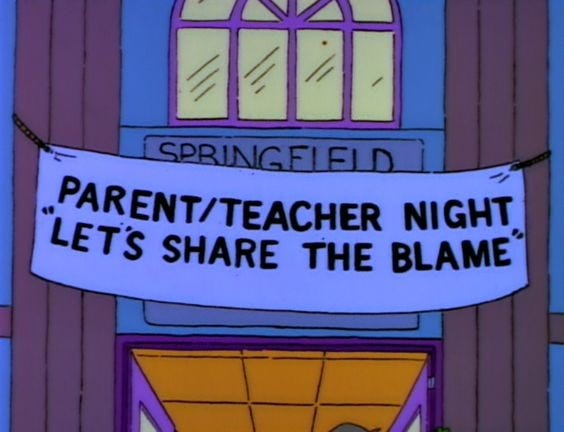
< giggle >
Coming Attractions
On March 21, Read Washington hosts a conversation with Freddy Hiebert on ways that AI can support vocabulary development.
On April 16-18, Learning and the Brain is live from New York and available virtually. Hear from Dan Willingham, Natalie Wexler, Sarah Oberle, Leslie Laud, and more.
The Southern Surge will get a spotlight at the ASU-GSV Summit, and I’m thrilled to moderate the conversation. Hope to see you in San Diego!
Mark your calendars for ResearchEd NYC on May 2nd.
Beyond the Edusphere
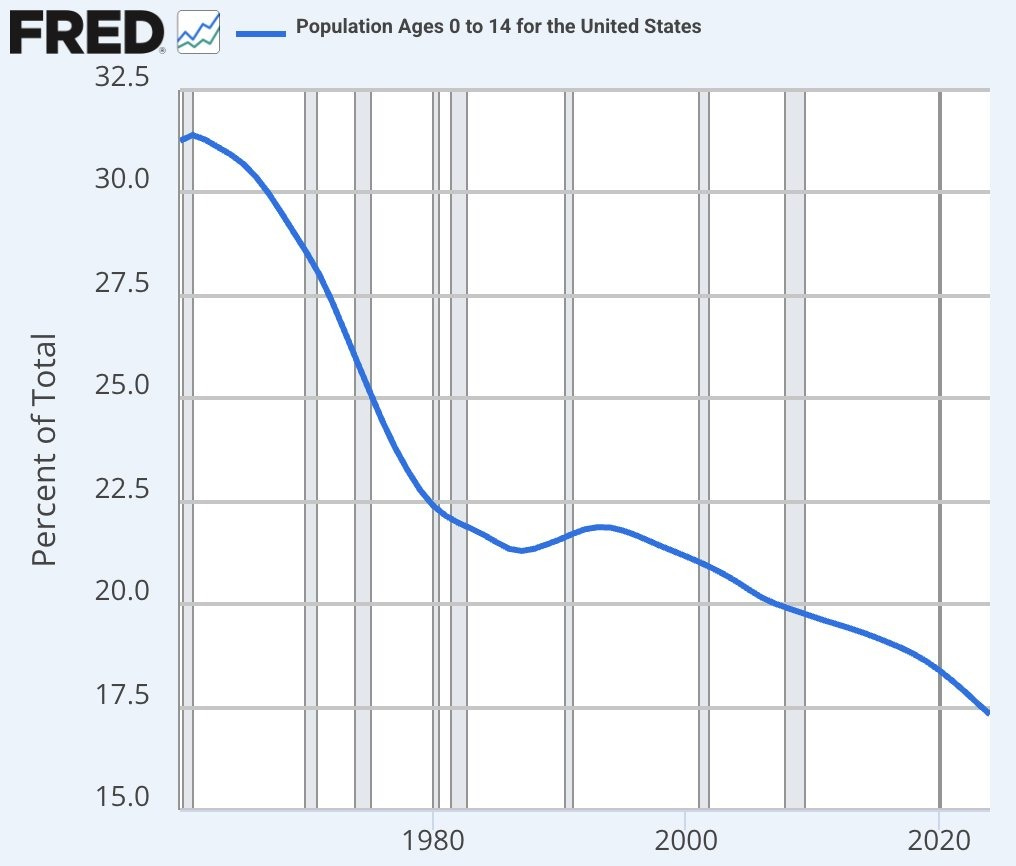
“As a percentage of the population, kids (0-14), are about half of what they used to be.”
Thanks for reading! Nominate a story for this newsletter here.
For Spring Break, this newsletter will take a hiatus. Instead, on Easter weekend (4/4), I’ll be resurrecting must-read favorites from the last few years. What’s the most essential literacy reading of this era? (And y’all, I already know about Sold a Story.) Nominate a story for the Throwback Newsletter here.